Polished Concrete vs Epoxy Flooring: Which Is Better?
If you're a business owner trying to settle on the right flooring for a warehouse, retail space, or production floor, you've probably already narrowed it down to two contenders: polished concrete and epoxy flooring. Both stand up to heavy use, both look sharp, and both can add real value to a commercial property — but they get there in different ways, and the right pick depends on what actually happens on that floor every day. At Durashield LLC, we've installed both systems for commercial clients across New Jersey, Pennsylvania, and Delaware, and we've learned that the right answer almost always comes down to your specific space, budget, and operations. Below, we break down how these two systems compare, what installation really involves, and how to decide which one earns its keep in your building.
Comparison of Polished Concrete and Epoxy Flooring for Commercial Use
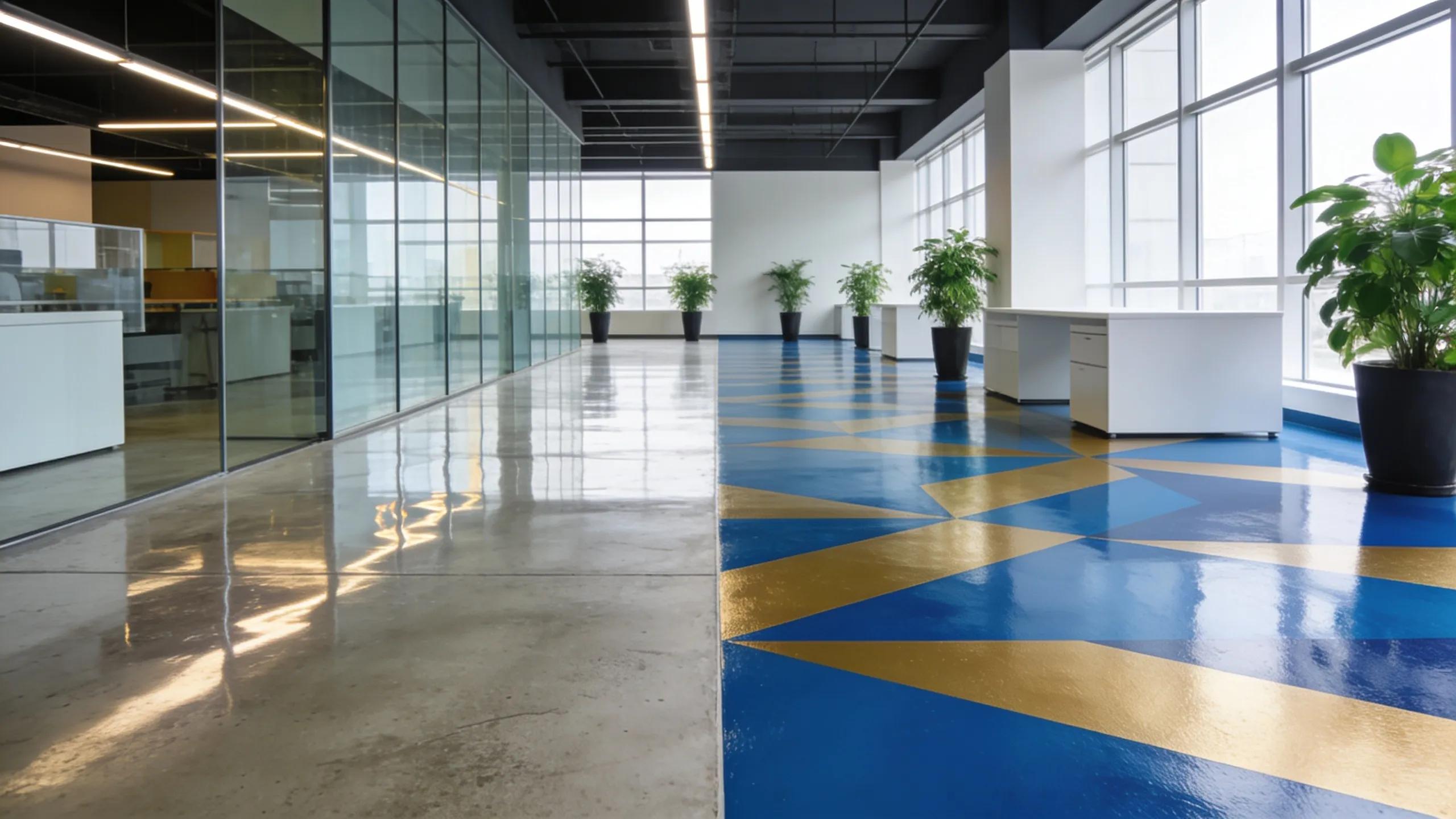
Polished concrete and epoxy flooring are the two systems we get asked about most, and for good reason — both hold up to years of commercial use when they're installed the right way. Polished concrete is created by mechanically grinding down the existing slab in progressive steps and densifying it with a penetrating sealer, while epoxy flooring is built up from resin and hardener that chemically bond to a properly prepared concrete surface. Which one makes sense for you usually comes down to how much traffic the floor sees, what look you're going for, and how much maintenance you want to deal with down the road.
Polished Concrete:
Polished concrete earns its popularity because it's tough and largely maintenance-free once it's done. The finish resists staining, and its reflective surface can noticeably brighten a space by bouncing around natural and artificial light. We can also customize the look — exposing aggregate, adding dye, or adjusting the sheen — so it fits the brand and feel of your space, not just its function. Cost-wise, polished concrete tends to be the more budget-friendly option upfront and asks little of you afterward. The trade-off is that it's still concrete underneath, so it can crack over time, and most floors need occasional resealing to keep performing the way they should.
Epoxy Flooring:
Epoxy flooring is what you turn to when a floor needs to take a beating and still look good doing it. Built from epoxy resin, it forms a dense, chemical-resistant surface that shrugs off heavy equipment, forklift traffic, and the kind of spills that would eat away at a lesser floor — which is exactly why we install so much of it in warehouses, manufacturing plants, and industrial facilities. The glossy, seamless finish also does plenty for the appearance of a commercial space. The catch is that a proper epoxy installation takes more steps and more time than polished concrete, and cutting corners on prep work is the number one reason epoxy floors fail early.
So which one wins? Neither, really — it comes down to the job your floor has to do. Here's a side-by-side look at how they compare.
Factor | Polished Concrete | Epoxy Flooring |
|---|---|---|
Upfront Cost | Lower | Higher |
Best For | Retail, offices, showrooms | Warehouses, plants, industrial facilities |
Chemical & Stain Resistance | Good | Excellent |
Maintenance | Minimal, occasional resealing | Low, may need topcoat refresh over time |
Aesthetic Range | Natural, architectural look | Bold colors, flake systems, custom designs |
Installation Time | Faster | Longer, multi-step cure process |
Long-Term Durability in Heavy Traffic | Strong | Superior |
What Are the Key Differences Between Polished Concrete and Epoxy Flooring?
Once you get past the basics, a handful of practical differences tend to drive the final decision:
Durability: Both systems are built to last, but epoxy has the edge in high-traffic, chemical-heavy environments — think manufacturing floors or vehicle bays. Polished concrete holds up beautifully in retail and office settings but isn't quite as bulletproof under industrial abuse.
Aesthetic Options: Polished concrete gives you a natural, architectural look that a lot of clients love for showrooms and lobbies. Epoxy opens the door to bold colors, flake systems, and custom designs if you want your floor to make a statement.
Maintenance: Polished concrete is about as low-maintenance as commercial flooring gets. Epoxy holds up great day-to-day, but most systems need resealing or a topcoat refresh after several years of heavy use.
What Are the Typical Installation Processes for Each Flooring Type?
The installation process is really where these two systems part ways — and it's also where a lot of flooring projects go wrong when the prep work gets rushed.
Polished Concrete Installation Process:
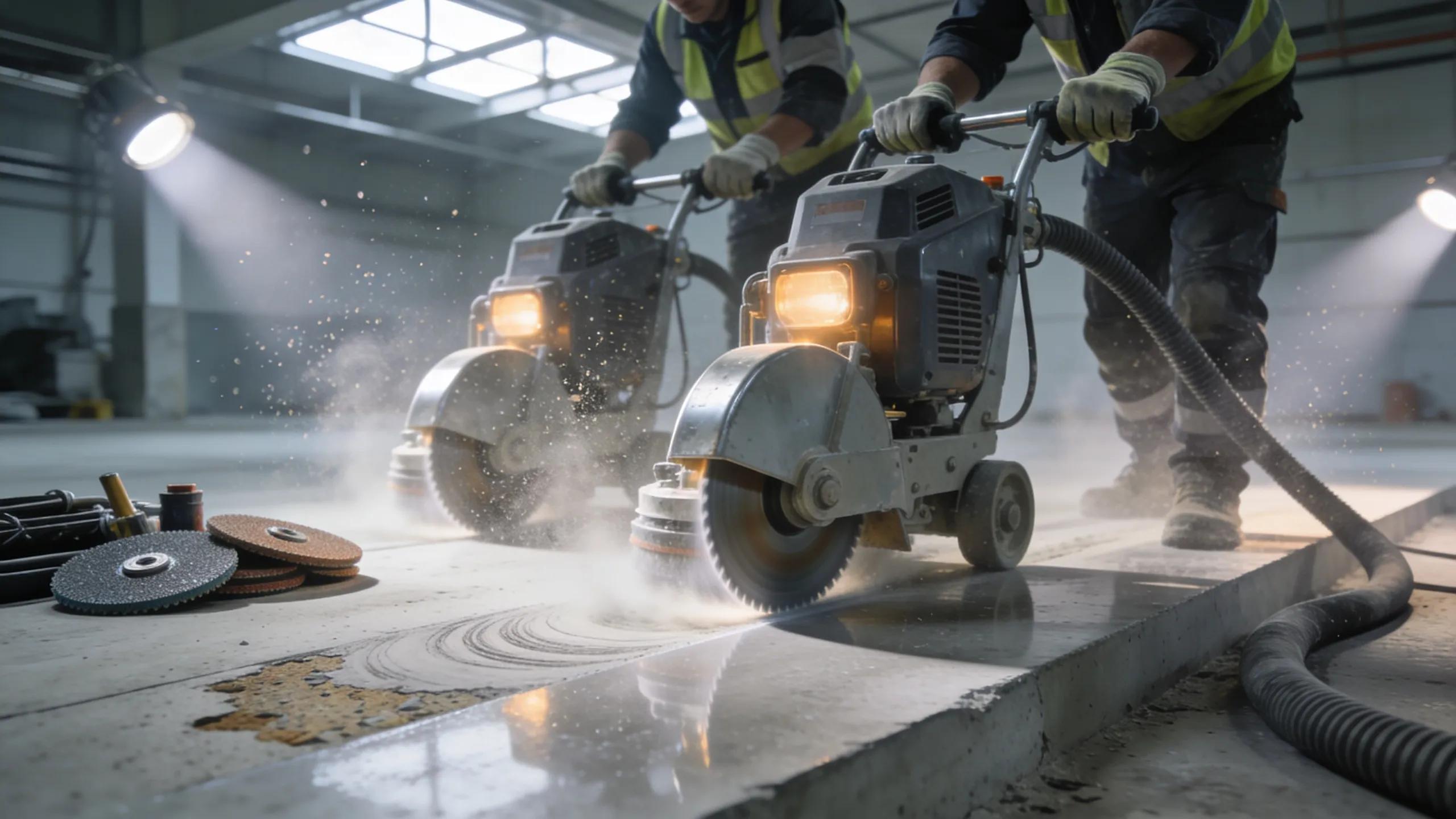
Here's what a polished concrete job actually looks like on our schedule:
Surface Preparation: We clean the slab thoroughly and repair any cracks, spalling, or imperfections before grinding even starts — skip this step and every flaw shows up in the final polish.
Grinding: Diamond grinding equipment works the surface through progressively finer grits until it reaches the level of shine you're after.
Sealing: A penetrating sealer locks in the finish and gives the floor its long-term stain and moisture resistance.
Epoxy Flooring Installation Process:
Epoxy is a more involved process, and it rewards patience:
Surface Preparation: The concrete gets cleaned, mechanically profiled, and tested for moisture — this is exactly the kind of floor demo and grinding work we handle in-house, and it's the step that determines whether an epoxy floor lasts five years or fifteen.
Application: We mix and pour the epoxy in carefully controlled layers, spreading each coat evenly so the finished floor has no thin spots or bubbles.
Curing: The floor needs time to cure fully — depending on the formulation, that can take anywhere from a couple of days to over a week before it's ready for full use.
Which Flooring Option Offers Superior Durability and Maintenance Benefits?
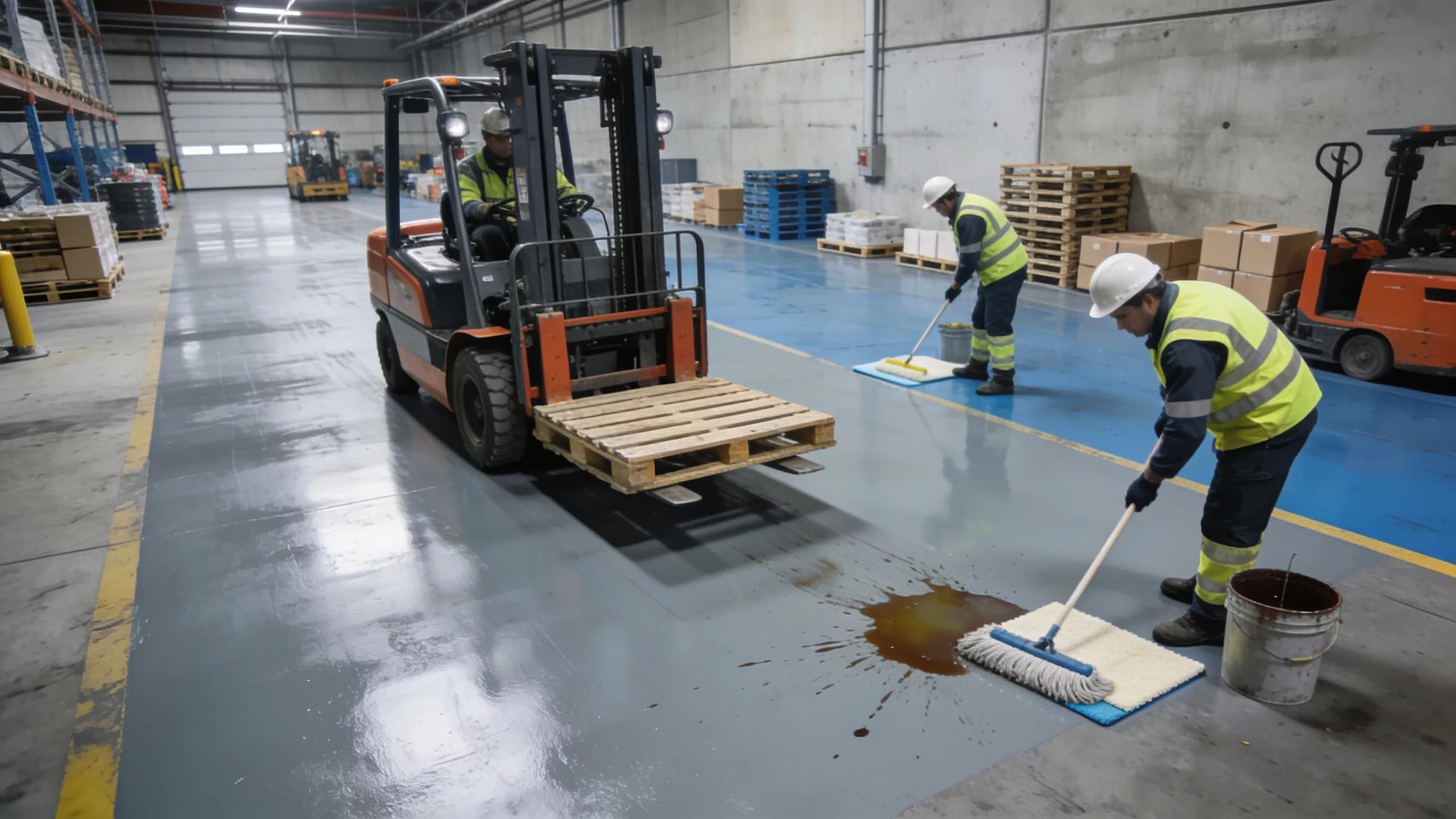
When durability and maintenance are the deciding factors, epoxy usually comes out ahead in demanding environments — its chemical resistance and load-bearing strength make it the go-to for industrial and heavy commercial applications. That said, we still recommend polished concrete to plenty of clients, especially when low upkeep and cost-effectiveness matter more than standing up to forklift traffic or chemical spills. Both are solid investments; it's about matching the floor to how hard you're going to work it.
How Do Costs and Return on Investment Compare Between Polished Concrete and Epoxy Flooring?
On day one, polished concrete usually costs less to install than epoxy. But total cost of ownership tells a fuller story — in high-traffic or hazardous environments, epoxy's resistance to damage often means fewer repairs and replacements down the line, which can make it the better long-term investment despite the higher upfront price. We always encourage clients to look past the initial quote and think about what the floor will cost, or save, over the next ten years.
Which Flooring Solution Is Best Suited for Specific Commercial and Industrial Use Cases?
The right choice really comes down to what happens on that floor every day. Facilities running heavy machinery, handling chemicals, or dealing with constant spills are almost always better served by epoxy. Retail stores, offices, and showrooms, on the other hand, often get everything they need — durability, good looks, easy upkeep — from polished concrete. We've installed both across warehouses, distribution centers, retail buildouts, and office spaces throughout New Jersey, Pennsylvania, and Delaware, and matching the system to the use case is always step one.
When Is Epoxy Flooring the Preferred Choice for High-Traffic Industrial Areas?
Epoxy tends to be the clear winner when a facility falls into any of these categories:
Durability: It shrugs off heavy loads and constant use without showing wear.
Chemical Resistance: Its non-porous surface stands up to spills, chemicals, and staining.
Fast Turnaround When Planned Right: Installation takes more steps than polished concrete, but with the right scheduling it doesn't have to shut your operation down for long.
Frequently Asked Questions
Which is cheaper to install: polished concrete or epoxy flooring?
Polished concrete typically costs less upfront since it uses your existing slab and requires fewer material layers. Epoxy flooring costs more to install because of the resin materials and multi-step application, but it often pays that difference back in reduced repairs and downtime in high-traffic or chemical-exposed facilities.
How long does each flooring system last in a commercial setting?
A properly installed and maintained polished concrete floor can last decades with only occasional resealing. Epoxy flooring holds up for many years under heavy use, though most commercial epoxy systems benefit from a topcoat refresh after several years of forklift traffic or chemical exposure.
Can epoxy or polished concrete be installed over an old, damaged floor?
In most cases, yes — but only after proper floor demo and grinding to remove old coatings, repair cracks, and correct moisture issues. Skipping this prep work is the leading cause of early flooring failure, which is why we treat surface preparation as the most important step in every project.
Does Durashield LLC install commercial flooring outside of New Jersey?
Yes. Durashield LLC installs polished concrete, epoxy, and urethane cement flooring for commercial and industrial clients throughout New Jersey, Pennsylvania, and Delaware.
How do I know which flooring system is right for my business?
It depends on your traffic levels, exposure to chemicals or moisture, and the look you want. Our team walks through your facility, assesses the existing concrete, and recommends the system that fits your budget and how the space is actually used.
Conclusion
Polished concrete and epoxy flooring are both proven performers, but "proven" only holds up when the installation is done right. Polished concrete gives you a durable, low-maintenance floor at a lower upfront cost — a smart fit for retail spaces, offices, and showrooms. Epoxy flooring costs more to install but delivers unmatched chemical resistance and load-bearing strength, making it the better long-term investment for warehouses, manufacturing floors, and industrial facilities. The floor that's "best" isn't universal — it's the one that matches how your business actually uses the space, day in and day out.
That's the conversation we have with every client before a single tool touches the slab. Whatever direction you're leaning, getting the surface prep right is what separates a floor that lasts fifteen years from one that needs redoing in three.
Ready to Choose the Right Floor for Your Business?
Durashield LLC has installed polished concrete, epoxy, and urethane cement flooring for commercial and industrial clients throughout New Jersey, Pennsylvania, and Delaware. Whether you're outfitting a warehouse, retail space, or production facility, our team handles everything from floor demo and grinding through final finish — so the prep work that most contractors rush is exactly where we start.
Explore our Polished Concrete, Resinous Epoxy, Urethane Cement, and Floor Demo & Grinding services, browse real installs in our Projects Gallery, or visit us online to schedule a walkthrough of your facility. You can also reach our team directly at +1 (609) 666-9198 or [email protected].